
WordFlow
Software: Figma, Photoshop, Unity
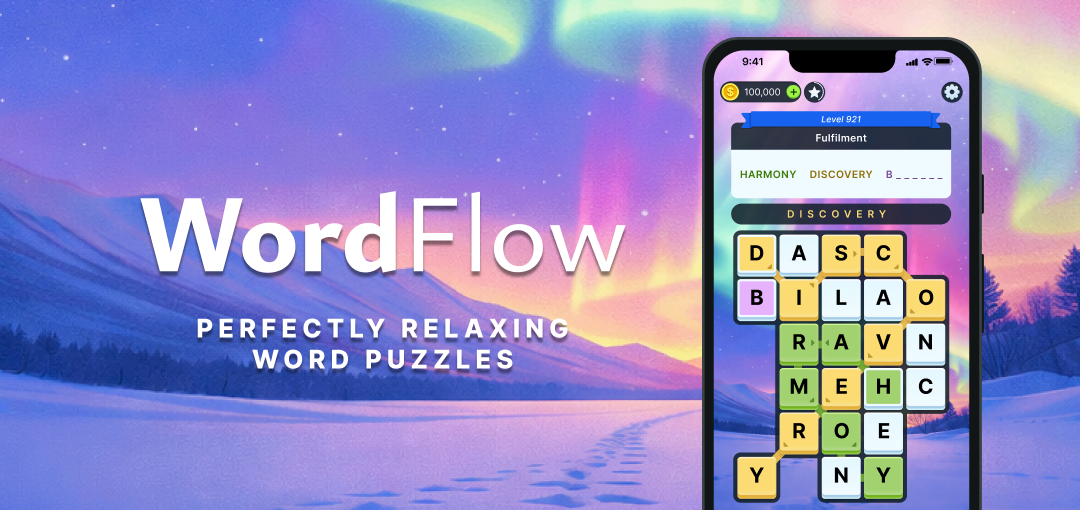
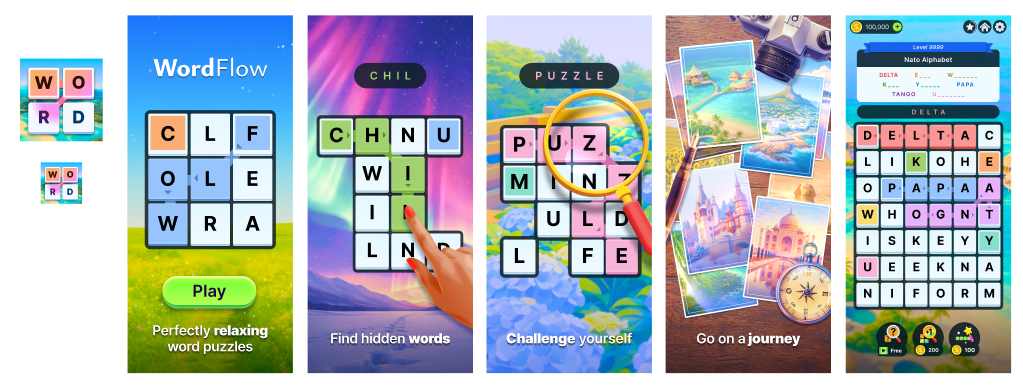
WordFlow is a relaxing word search puzzle game where players solve engaging levels and journey through a variety of beautiful new locations.
Main Game UI
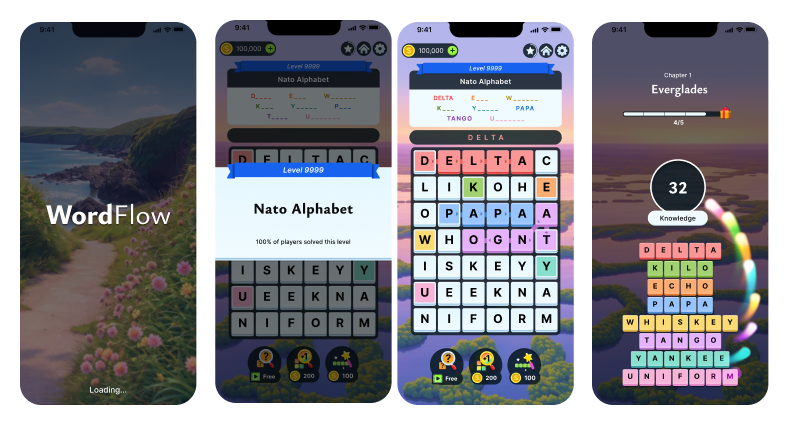
Each level featured a collection of fun, themed words to discover across the game board. Unlocking new, beautiful locations gave players a rewarding sense of achievement and progress.
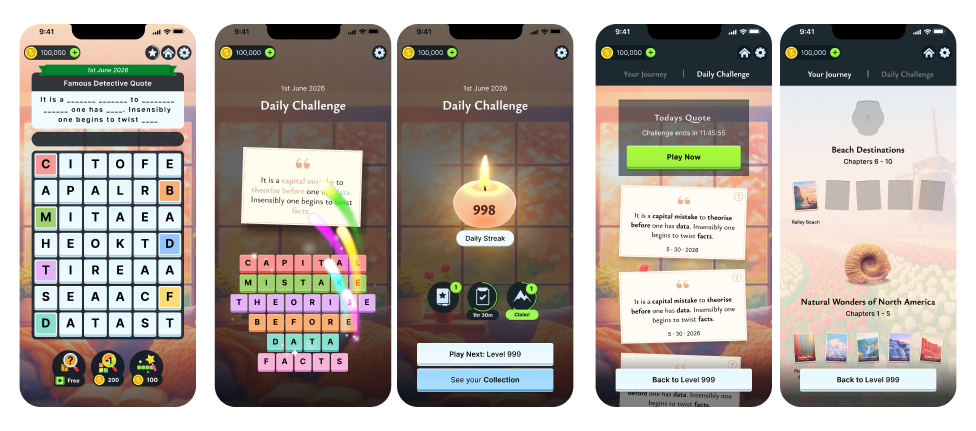 A daily challenge mode introduced players to uplifting quotes from a new author each day, while encouraging them to maintain a daily streak for ongoing inspiration.
 Wireframes
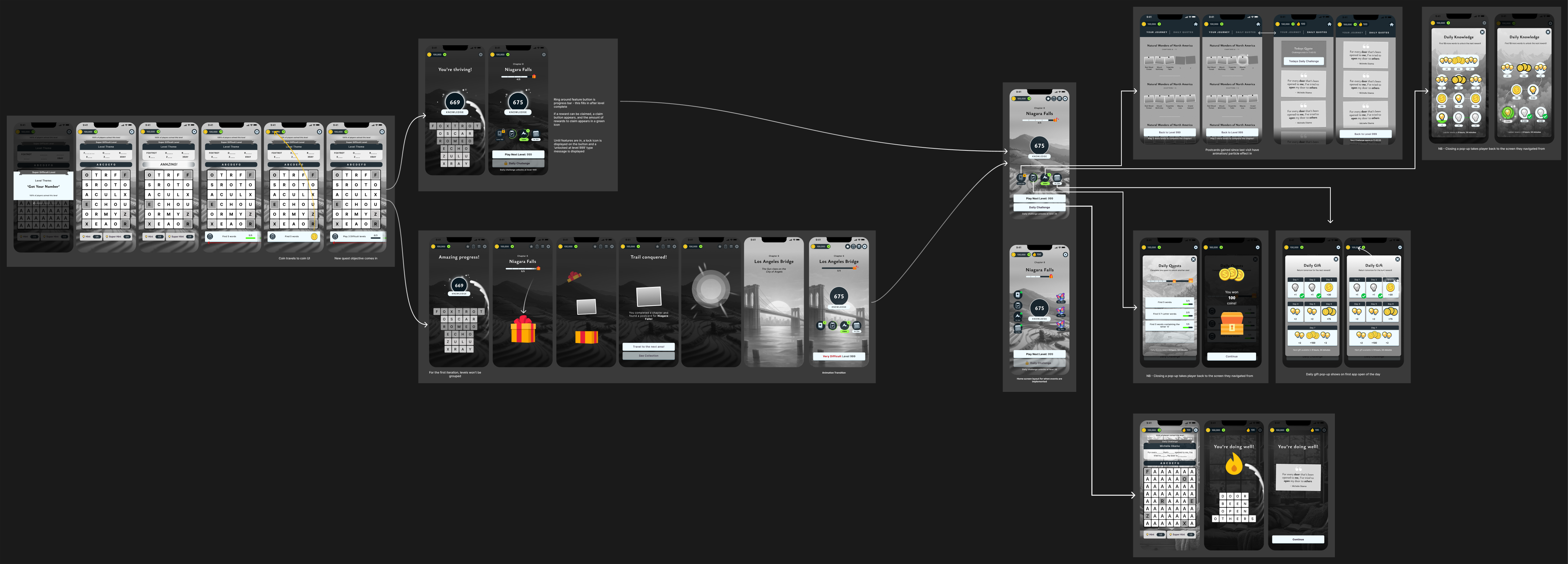 Following some initial rounds of UA testing and prospective surveys, I identified opportunities to create a more marketable theme and strengthen the overall player experience. I then took ownership of the wireframing and UX design, shaping a clear gameplay loop and user flow that encouraged players to progress level by level without feeling overwhelmed.
 I recommended removing unnecessary friction by taking players directly into their current level, while redesigning the endgame and home experience around a minimal, lightweight interface that made the next action immediately clear.
To strengthen engagement and long-term retention, I designed several progression mechanics that layered motivation throughout the experience. A rolling, never-ending quest system gave players ongoing goals and encouragement during core gameplay, while “Daily Knowledge” created an additional reason to continue playing. I also designed the Daily Challenge streak and Quote & Postcard collections to introduce longer-term progression, giving players tangible goals and a stronger sense of achievement beyond individual levels.
Animation & FX
Engaging core game FX gave players immediate feedback, while fun and imaginative hint animations strengthened the hint theming and individuality, rewarding players for using coins.Background Images
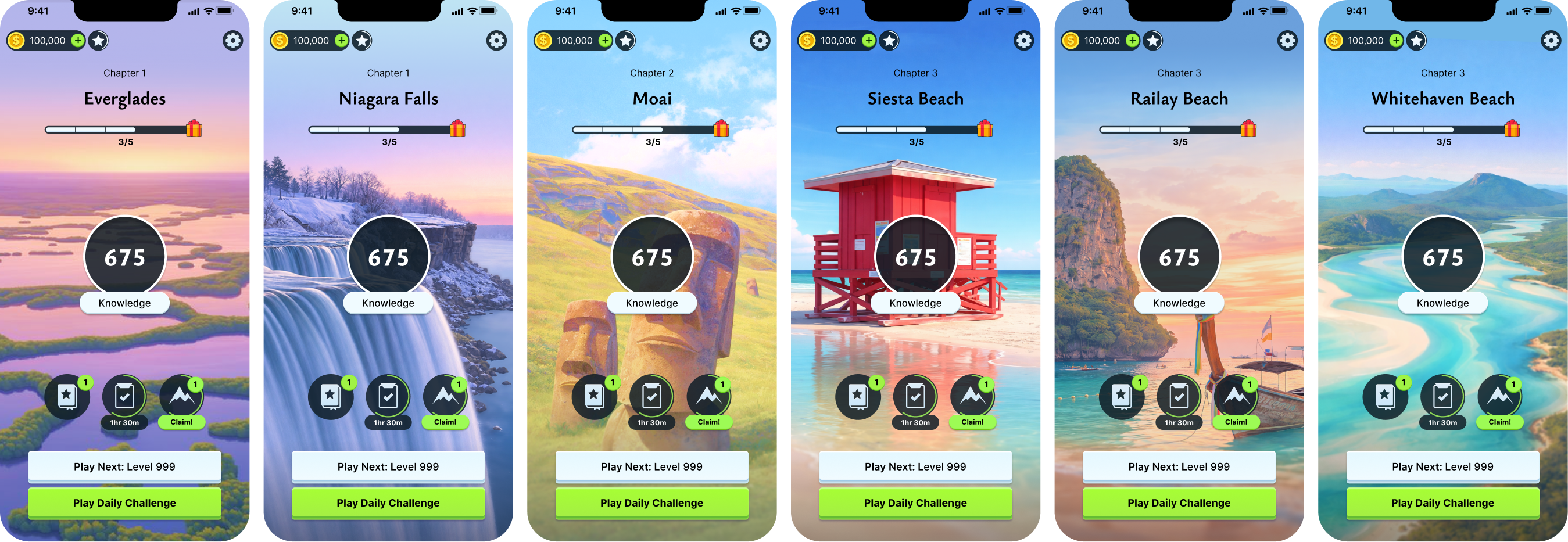
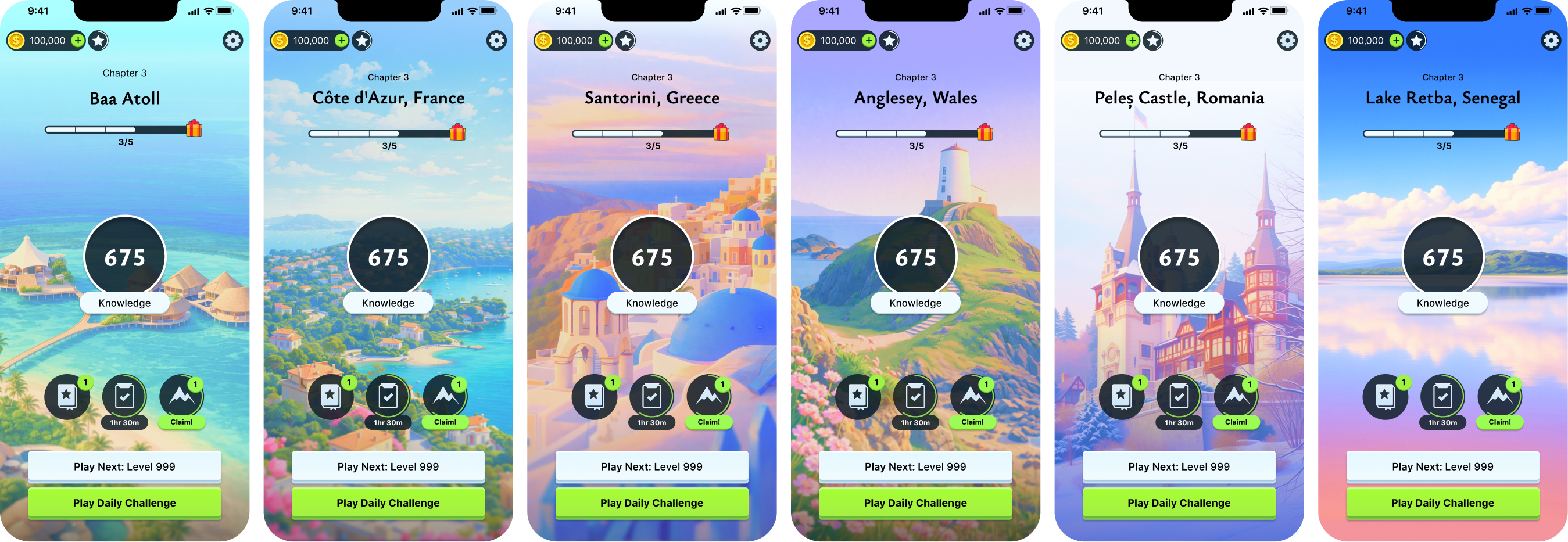
Initial user testing and prospective player surveys showed that players responded most positively to a visual style that felt realistic, yet beautiful and charming, with a subtle painterly quality.
As the game required a large variety of travel destinations, I needed a way to generate new locations at scale without sacrificing visual consistency or limiting the player’s sense of progression through a lack of content. To address this, I trained an existing AI model using a LoRA (Low-Rank Adaptation), allowing me to generate a consistent visual style across a wide range of environments and locations.
Travel destinations were then organised into thematic groups, such as “Natural Wonders of North America,” with location selection informed by user research. Particular emphasis was placed on destinations that players identified as aspirational places they would genuinely like to visit, helping to make the player’s journey feel rewarding and motivating.
Subtle animations using Unity particle effects and shaders brought the backgrounds to life, enhancing the atmosphere while maintaining performance and keeping asset sizes minimal.